
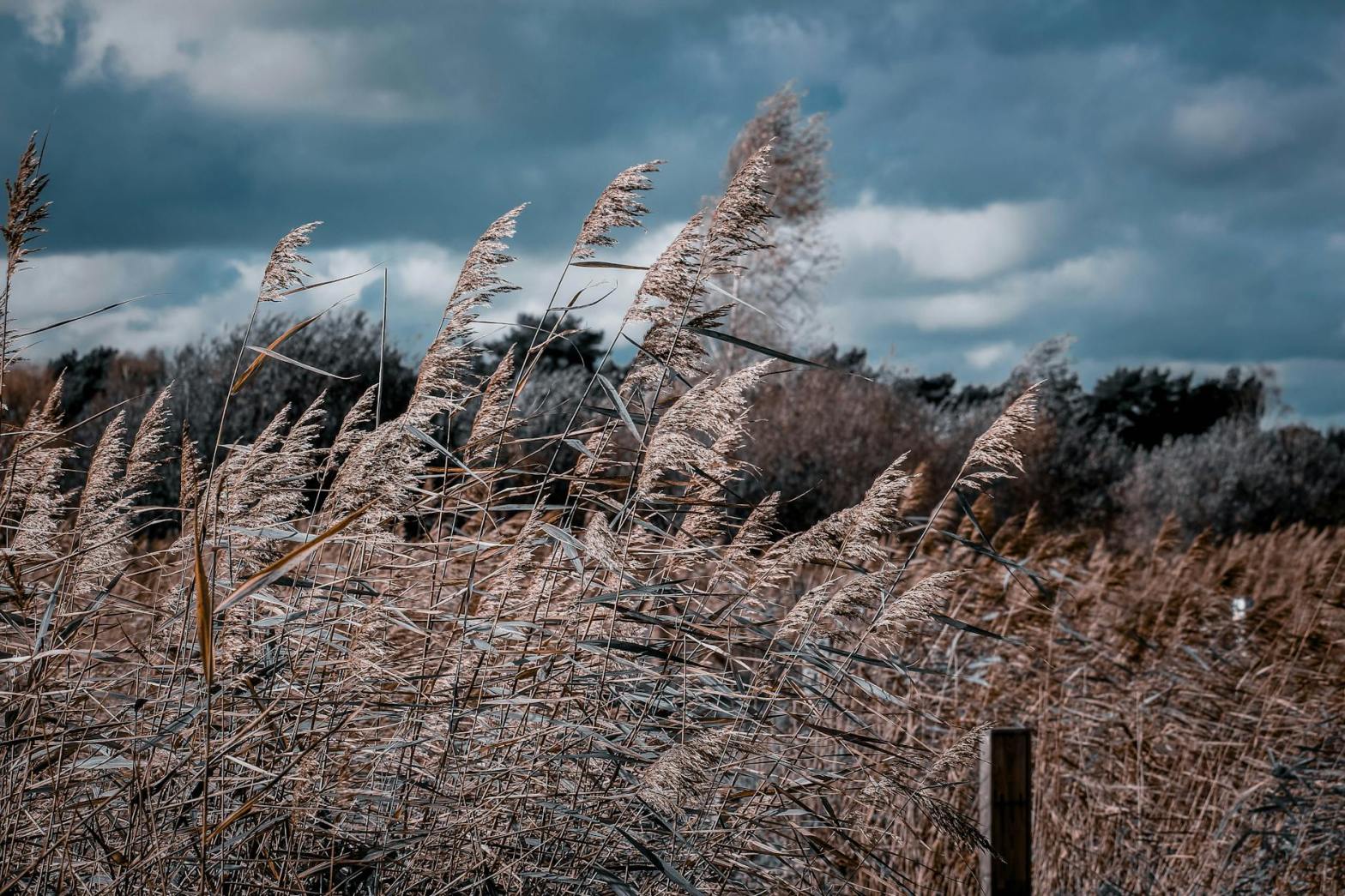
“Would that all the Lord’s people were prophets, that the Lord would put his Spirit on them!” Numbers 11:29
In 1806, five students at Williams College in Massachusetts got caught in a thunderstorm while meeting to pray about foreign missions. They took shelter under a haystack and kept praying. The group was small. The setting was unimpressive. Samuel Mills, the student who had organized the meeting, had been burdened for months by the question of whether American Christians had any obligation to take the gospel beyond their own borders. The answer they reached under that haystack led to the founding of the American Board of Commissioners for Foreign Missions, the first organized missionary-sending body in the United States. Within a generation, that small group’s prayer meeting had produced missionaries in India, China, Hawaii, and the Middle East.
The Haystack Prayer Meeting is remembered because something that started with five students in a field spread outward until it reached the other side of the world. The pattern is older than 1806. It runs all the way through Scripture. This week’s Pentecost readings trace a single question across the biblical story: What happens when God’s Spirit, once given to a few, is poured out on all flesh? Moses wished for it. The psalmist sang about the breath that sustains all creation. Jesus breathed the Spirit onto his disciples in a locked room. And at Pentecost, the doors blew open and every nation heard the gospel in their own language. The Spirit that rested on seventy elders in the wilderness now rests on the whole people of God, and the reach of that gift extends to the end of the earth.
Numbers 11:24–30
The Wish
“Would that all the Lord’s people were prophets, that the Lord would put his Spirit on them!” (v. 29)
Moses is exhausted. The burden of leading Israel through the wilderness has broken him. God responds by taking some of the Spirit that rests on Moses and distributing it to seventy elders gathered around the tent. When the Spirit comes on them, they prophesy. Two men, Eldad and Medad, stay behind in the camp rather than going to the tent, and the Spirit rests on them too. They prophesy right where they are, outside the authorized location.
Joshua sees this and objects: “My lord Moses, stop them.” Joshua’s instinct is to protect the boundary. The Spirit belongs at the tent, among the officially gathered leadership. Moses sees it differently. His response is a wish that outpaces his own moment in history: “Would that all the Lord’s people were prophets, that the Lord would put his Spirit on them!” Moses looks at the Spirit resting on Eldad and Medad outside the tent and wants more of it, for more people, in more places. The Spirit in Numbers 11 is redistributed from one man to a group, but the effect is temporary (“they did not continue doing it,” v. 25), the scope is limited to seventy, and the wish for something wider hangs in the air, unanswered.
Psalm 104:24–34, 35b
The Breath
“When you send forth your Spirit, they are created, and you renew the face of the ground.” (v. 30)
The psalm widens the lens beyond Israel entirely. The psalmist looks at the whole created world, the sea teeming with creatures, Leviathan playing in the deep, every living thing waiting for God to give it food in due season, and traces all of it back to a single source: the breath of God. The Hebrew word ruach carries the meaning of breath, wind, and spirit simultaneously. When God sends forth his ruach, creation happens. When God withdraws it, creatures die and return to dust.
This is the broadest frame the scripture readings offer. Before the Spirit gifts prophets or apostles, the Spirit is the breath holding every living thing in existence. The same God who placed his Spirit on seventy elders in the wilderness sustains every creature on earth through the same ruach. The psalm invites the congregation to see Pentecost in its proper scale: the God who pours out his Spirit on the church is the God whose breath renews the face of the ground. The gift the church receives at Pentecost is connected to the power that holds the universe together.
John 20:19–23
The Breathing
“And when he had said this, he breathed on them and said to them, ‘Receive the Holy Spirit.'” (v. 22)
The disciples are gathered in a locked room on the evening of the resurrection. Jesus appears among them, shows them his hands and his side, and speaks peace over them. Then he commissions them: “As the Father has sent me, even so I am sending you” (v. 21). And then he breathes on them.
The Greek verb John uses here, emphysao, is the same word the Septuagint uses in Genesis 2:7 when God breathes the breath of life into Adam’s nostrils. Jesus is performing a new creation act. The ruach the psalmist celebrated as the breath sustaining all creation is now being given by the risen Christ to a specific group for a specific mission. And Jesus ties this gift directly to the forgiveness of sins: “If you forgive the sins of any, they are forgiven them” (v. 23). The Spirit is given for reconciliation. The commission is outward-facing. But the doors are still locked. The group is still small. The breath of new creation has entered the room, but the room has yet to open to the world.
This moment stands between Moses’ wish and its fulfillment. The Spirit has moved from redistribution (Numbers 11) to new creation (John 20). The scope has shifted from the seventy elders to the apostolic community. The purpose has been defined: forgiveness and mission, the same work the Father gave the Son. But Moses’ wish for all God’s people to carry the Spirit remains unfulfilled. The doors are about to open.
Acts 2:1–21
The Outpouring
“‘And in the last days it shall be, God declares, that I will pour out my Spirit on all flesh, and your sons and your daughters shall prophesy.'” (v. 17)
The day of Pentecost arrives. The disciples are together in one place. A sound like a mighty rushing wind fills the house. Tongues as of fire appear and rest on each one of them. They are filled with the Holy Spirit and begin to speak in other tongues as the Spirit gives them utterance. Jews from every nation under heaven hear the mighty works of God in their own languages.
Peter stands and explains what is happening. He quotes Joel 2: God is pouring out his Spirit on all flesh. Sons and daughters prophesy. Young men see visions. Old men dream dreams. Male and female servants receive the same Spirit. The boundaries Joshua tried to enforce in Numbers 11 are gone. The locked room of John 20 has been blown open by wind. Moses’ wish has been fulfilled in a way that exceeds anything he could have imagined. The seventy have become thousands. The tent has become every nation. The temporary prophesying of the elders in the wilderness has become a permanent indwelling that will carry the gospel to the end of the earth. And the promise Peter declares is open to everyone: “Everyone who calls upon the name of the Lord shall be saved” (v. 21).
The breath of Psalm 104 that renews all creation, the breath of John 20 that commissioned the apostles for forgiveness, is now the wind of Pentecost filling the house and filling the church for mission.
The Spirit Is for Everyone
The Haystack Prayer Meeting started with five students. Within a generation, the movement they catalyzed had sent gospel workers across the globe. The pattern traces back to Pentecost, which traces back to a locked room, which traces back to a tent in the wilderness where Moses wished for something he would never see in his own lifetime.
The practical reality of Pentecost is that the Spirit has been given to you. If you are a believer in Jesus Christ, the same ruach that sustains creation, the same breath Jesus breathed on his disciples, the same wind that filled the house in Acts 2, dwells in you. And the Spirit was given for a purpose: to empower the people of God for witness and for the ministry of reconciliation.
The question confronting each of us on Pentecost is whether we are living in the scope of the gift. Moses wished all God’s people were prophets. Joel prophesied that sons and daughters would speak. Peter declared it fulfilled. The Spirit has been distributed beyond the tent, beyond the locked room, beyond Jerusalem, and into every place where believers gather and scatter. You carry the breath of God. You have been commissioned as the Father sent the Son. The forgiveness of sins has been entrusted to the church. This is a gift that asks something of you: go, speak, forgive, testify, and trust the Spirit to give you the words where He has called you.
Points to Ponder
1. Joshua wanted to stop Eldad and Medad from prophesying outside the tent. Moses refused. Where are you tempted to put boundaries on how or where the Spirit works?
2. Psalm 104 describes God’s ruach as the breath sustaining all creation. How does this cosmic view of the Spirit shape the way you understand the Holy Spirit’s work in your daily life?
3. In John 20, Jesus breathed on the disciples and commissioned them before the doors of the room opened. What does it look like to receive the Spirit in a season of waiting, before you see the full result of what God is doing?
4. Peter declared that Joel’s prophecy was being fulfilled: sons and daughters, young and old, servants male and female, all receiving the Spirit. Where do you see the Spirit at work in people you might otherwise overlook?
5. The five students at the Haystack Prayer Meeting had no organizational structure, no funding, and no platform. They prayed, and the Spirit moved a generation into mission. What would happen if your small group, your choir, your Sunday school class, or your family committed to sustained, focused prayer for the spread of the gospel?
A Prayer
Father, we thank you for the gift of your Spirit, the breath that holds all creation together and renews the face of the ground. We thank you that your Son Jesus, risen from the dead, breathed on his disciples and commissioned them to carry your forgiveness into the world. We thank you that at Pentecost you fulfilled the wish Moses spoke in the wilderness and the prophecy Joel declared to Israel: your Spirit has been poured out on all flesh. We ask you to fill us with that same Spirit today. Give us boldness to speak. Give us humility to listen. Give us the courage to carry the gospel beyond the rooms where we feel safe. Tear down every boundary we have built around your work. Send us as the Father sent the Son. And may your Spirit flow from within us like rivers of living water, reaching every thirsty person you place in our path. We ask this in the name of Jesus Christ, who was glorified and who sends the Spirit. Amen.
Concluding Verse“And it shall come to pass that everyone who calls upon the name of the Lord shall be saved.” Acts 2:21
 Josh Cehulik
Oh my! What a powerful message on the Holy Spirit, Pastor Josh. Thank you 🙏
LikeLiked by 1 person