
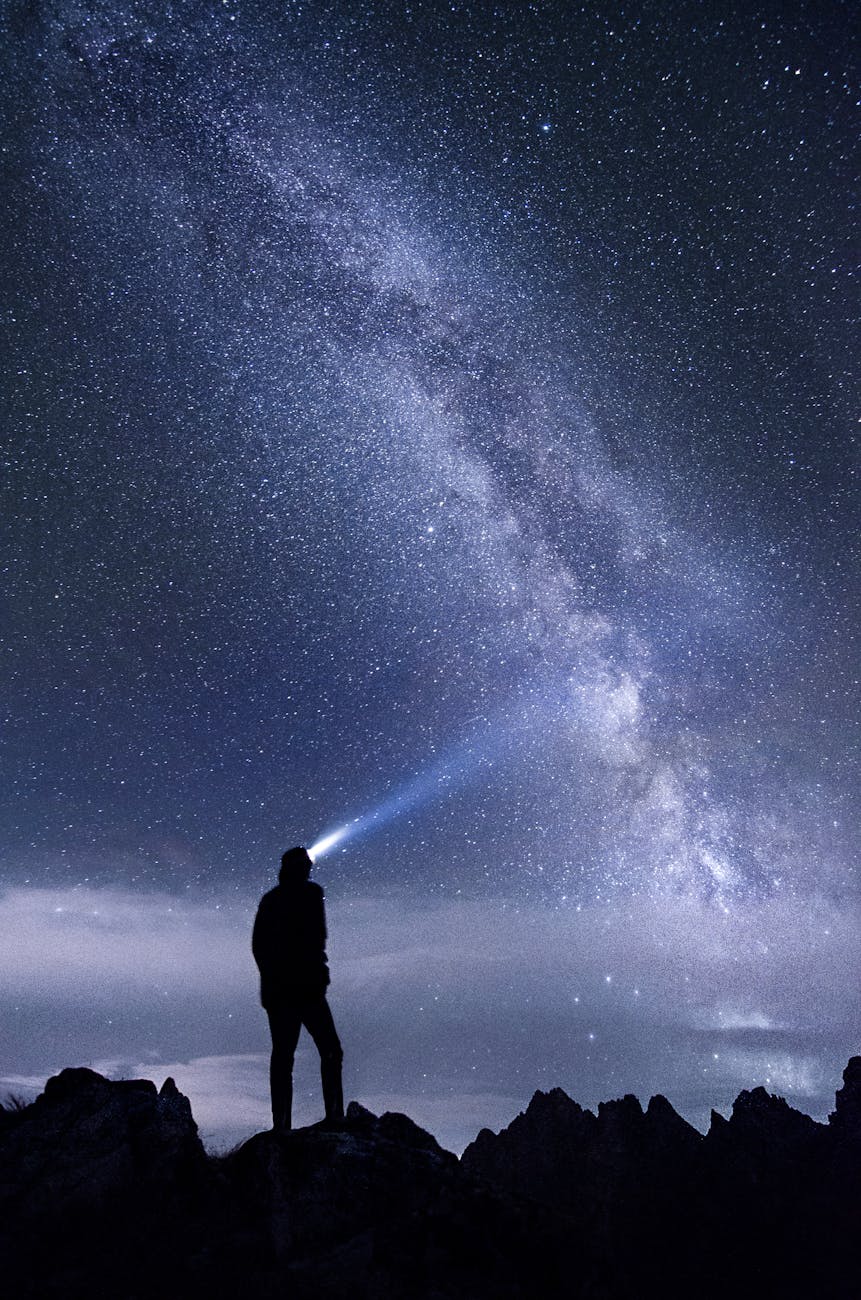
“I will lift up mine eyes unto the hills, from whence cometh my help. My help cometh from the LORD, which made heaven and earth.” (Psalm 121:1-2)
In 1990, the Hubble Space Telescope launched into orbit with a mission to show humanity what we had never seen before. Scientists pointed it toward what appeared to be empty, dark space and let it gather light for ten days straight. The result became known as the Hubble Deep Field—an image revealing thousands of galaxies where we saw only darkness. We looked up and discovered the universe held far more than we imagined.
This pattern repeats throughout Scripture. God invites us to look, and then shows us something that exceeds our wildest expectations. The readings for today trace this theme through four moments in salvation history, each revealing how God stretches our vision beyond what we thought possible.
Abraham Looks at Land, God Shows Him a Nation (Genesis 12:1-4a)
When God called Abram to leave his country, the promise seemed straightforward: “Go to a land that I will show you.” Abram could picture land—boundaries, fields, a place to settle. He understood real estate. But God’s vision extended far beyond property lines. The land would give birth to a nation, and that nation would become a channel of blessing to every family on earth. Abram saw acreage; God saw ancestry reaching across generations and geography. The promise of land carried within it the seed of something Abram could never calculate—descendants as numerous as the stars, a family tree that would eventually include people from every tribe and tongue.
The Psalmist Looks at Hills, God Shows Him the Maker (Psalm 121)
The ancient pilgrim lifted his eyes toward the hills surrounding Jerusalem, perhaps seeing the mountain ranges that marked his journey to worship, perhaps viewing Mount Zion itself. These hills represented help, protection, the place where God’s presence dwelled. Yet the psalm immediately redirects our gaze. The hills serve only as signposts. Help comes from the LORD who made the hills, who fashioned heaven and earth, who keeps watch without sleeping. The Creator transcends His creation. Those hills will erode, but the one who shaped them remains constant. We admire the cathedral; God invites us to know the Architect. Geography points toward theology, and temporary sanctuaries point toward the eternal Keeper.
Nicodemus Looks at a Rabbi, Jesus Shows Him the Messiah (John 3:1-17)
Nicodemus arrived at night with respectful observations about Jesus’ teaching credentials and miraculous signs. He saw a rabbi, a teacher worth consulting about spiritual questions. Jesus immediately expanded the conversation beyond academic inquiry. Spiritual sight requires spiritual birth. Understanding the kingdom demands transformation of the one seeking to understand. Then Jesus pointed Nicodemus toward an Old Testament story he would have known well—Moses lifting the bronze serpent in the wilderness. Those dying from snakebites looked up at the lifted serpent and lived. Jesus would be lifted up on the cross, and everyone who looks to Him in faith receives eternal life. The rabbi Nicodemus came to question was actually the Messiah he needed to worship, the Son of Man descended from heaven to save the world.
Paul’s Readers Look for Their Savior, God Shows Them the Father of All (Romans 4:1-5, 13-17)
The Romans struggled with a question: How could Gentiles belong to the people of God? They looked for a Savior who fit their ethnic and religious categories. Paul directed them back to Abraham, showing them something unexpected. Abraham received God’s promise before circumcision, before the law, before any of the markers that later defined Jewish identity. He believed God, and God counted that faith as righteousness. This means Abraham fathers everyone who believes, regardless of background. God justifies the ungodly—all of them. The promise operates through faith so it can reach every nation. What looked like a story about one people becomes the pattern for all peoples. God makes alive the dead and calls into being things that do not yet exist. His vision always exceeds our tribal boundaries.
Living While Looking Up
Jesus modeled this pattern throughout His ministry. He looked at fishermen and saw apostles. He looked at a Samaritan woman and saw a worshiper in spirit and truth. He looked at a thief on a cross and saw a companion in paradise. He looked at His executioners and saw people who needed forgiveness. Where we see limitation, Jesus sees possibility. Where we see endings, He sees beginnings.
Following Jesus means asking Him to give us His eyes. We pray for vision that sees beyond the immediate and the manageable. We trust His promise to show us more as we follow Him. We walk like Abraham, lifting our eyes in faith, confident that the God who shows also provides. The journey of discipleship involves constant recalibration of our vision, letting go of our small categories so God can reveal His expansive purposes.
Points to Ponder
- What “land” are you focused on that might actually be about a larger “nation” God wants to build?
- Where have you stopped at creation (the hills) instead of pursuing the Creator?
- What credentials or categories limit your vision of who Jesus can save?
- How does knowing God “calls into existence things that do not exist” change your prayers today?
Prayer
Father, You made heaven and earth, and Your vision exceeds everything we can ask or imagine. Give us eyes to see what You want to show us. Help us trust Your promises when they stretch beyond our understanding. Thank You for sending Jesus, lifted up so that everyone who looks to Him might live. Teach us to walk by faith like Abraham, confident that You will show us more than we thought possible. Expand our vision to match Your heart for all nations. In Jesus’ name, Amen.
“For God so loved the world, that he gave his only begotten Son, that whosoever believeth in him should not perish, but have everlasting life.” (John 3:16)
 Josh Cehulik