
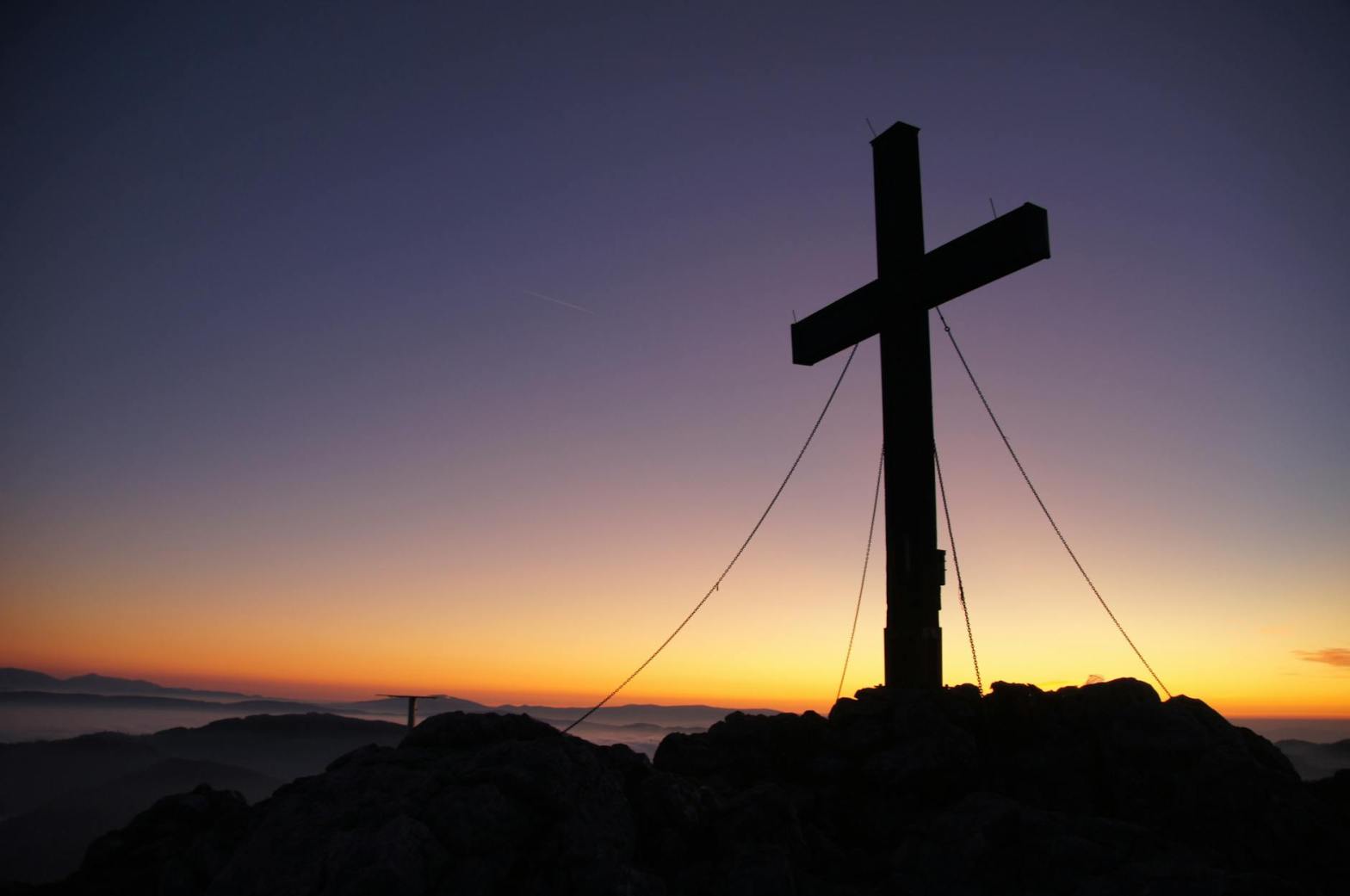
“And as Moses lifted up the serpent in the wilderness, even so must the Son of man be lifted up: That whosoever believeth in him should not perish, but have eternal life.” – John 3:14-15
Walk through any ancient Roman catacomb with an archaeologist and you’ll witness one of history’s most dramatic transformations. In the early sections, Christian symbols are carefully disguised—crosses hidden as ship anchors, faith marked by simple fish symbols. But move forward just a few centuries and everything changes. Bold X marks and crosses dominate every surface. Within generations, the most feared symbol in the Roman world became its most celebrated image.
What happened? Why did the Cross—an instrument of torture reserved for the worst criminals—become something people couldn’t stop celebrating? The answer reveals why we still gather every Sunday to sing about a crucifixion that happened 2,000 years ago.
The Cross didn’t just change individual hearts; it transformed the fundamental human condition. It solved a problem so deep that once people understood the solution, they couldn’t help but exalt what had once been hidden. Understanding why we need the Cross transforms how we worship, turning our songs from religious obligations into responses of wonder from people who’ve discovered they’re not as stuck as they thought they were.
The Problem We Don’t Want to Admit (Numbers 21:4b-9)
The Israelites had everything they needed but complained anyway. They had God’s provision, God’s presence, God’s protection—and they called it “light bread” they couldn’t stomach. Their response to blessing was ingratitude, and their response to difficulty was rebellion.
Sound familiar? This is the human condition in miniature. We’re never quite satisfied, never quite grateful, never quite trusting that God knows what He’s doing. The Israelites’ problem wasn’t their circumstances—it was their hearts. And when God’s judgment came through serpent bites, they discovered what we all eventually discover: we can’t fix ourselves.
Here’s what’s brilliant about God’s solution: He didn’t remove the serpents or give them medicine. He gave them something to look at. A bronze serpent lifted on a pole. Anyone bitten who looked up would live. The cure required them to stop their frantic self-rescue efforts and simply look to what God had lifted up.
This is why worship begins with acknowledging our need. When we sing “Just As I Am,” we’re not being melodramatic. We’re admitting the truth that makes the Cross necessary: we’re people who can’t save ourselves. The bronze serpent reveals that salvation has always been about looking up, not cleaning up.
The Cycle We Can’t Break (Psalm 78:1-2, 34-38)
This psalm tells the most uncomfortable story in Scripture because it’s our story. God rescues, we get comfortable, we drift away, consequences come, we panic and cry out, God rescues again. Rinse and repeat. The psalmist calls it “parables” and “dark sayings”—riddles that reveal how we actually live versus how we think we live.
I see this pattern everywhere. In my own spiritual life. In my relationships. In how I handle success and failure. We’re creatures of forgetfulness who turn blessings into entitlements and difficulties into accusations against God’s goodness.
But here’s what stops me every time: “He, being full of compassion, forgave their iniquity, and destroyed them not.” Even when their hearts weren’t right with Him, God’s heart remained steady toward them. This wasn’t just divine patience—this was love orchestrating something that would break the cycle permanently.
The Cross addresses the root problem, not just the symptoms. It doesn’t just forgive our individual sins; it deals with the condition that produces them. This is why confession and assurance matter in worship. We’re not just admitting we messed up again; we’re celebrating that the Cross has broken the power of the cycle that used to own us.
Love That Goes to Extremes (John 3:13-17)
Nicodemus thought he had religion figured out. Good teacher, respected leader, knew his Scripture. Then Jesus made a connection that changed everything: “As Moses lifted up the serpent in the wilderness, even so must the Son of man be lifted up.”
But wait—why a serpent? Of all the animals God could have chosen, why the very creature associated with humanity’s fall? Here’s the stunning truth: the serpent represented sin itself, and the dying Israelites had to look at the image of what was killing them to be healed. They had to stare at a bronze representation of their problem to find their solution.
This makes Jesus’s comparison breathtaking. When He says He must be lifted up like the serpent, He’s revealing that He would become the very thing that was destroying us. Paul later wrote it plainly: “He who knew no sin became sin for us.” The sinless Son of God would take on the full weight and ugliness of human rebellion, becoming the serpent lifted up for our healing.
Think about the magnitude of this. God didn’t just send a good teacher or even a perfect example. He sent His Son to become our sin—to absorb everything twisted and broken about human nature. The Cross reveals both the greatness of our sin (it required God Himself to bear it) and the greater remedy of grace (God was willing to bear it).
When we celebrate communion, we’re looking at our bronze serpent—Jesus who became sin for us. We’re not just remembering a good man who died unfairly; we’re celebrating the Son of God who became our sin so we could become His righteousness. That’s why Nicodemus left that conversation changed forever. That’s why we can’t stop singing about a crucifixion.
The Victory That Looks Like Defeat (1 Corinthians 1:18-24)
Paul had his work cut out for him in Corinth. These people understood power—military might, philosophical wisdom, religious spectacle. Then Paul shows up talking about a crucified Messiah. To them, this was like announcing that weakness was actually strength, that the losing side had won.
But Paul doubles down. He calls the Cross “foolishness” to those who are perishing, yet “the power of God” to those who are being saved. The Cross represents the ultimate reversal: what looks like God’s greatest defeat is actually His decisive victory.
This is why the Cross was so revolutionary. It redefined victory itself. The world measures triumph by dominance, accumulation, and self-preservation. The Cross achieved triumph through sacrifice, surrender, and self-giving love. It solved our problem not by overpowering it but by absorbing it.
This changes everything about worship. We’re not celebrating a god who imposed his will through force. We’re worshipping a God who achieved victory by taking our defeat upon Himself. When we sing about the Cross, we’re celebrating the most counterintuitive triumph in history—and the love that made it possible.
The Song We Can’t Help Singing (Psalm 98:1-5)
“O sing unto the Lord a new song; for he hath done marvellous things.” This isn’t just an instruction to update your playlist. This is what happens when people discover they’ve been rescued from a condition they couldn’t escape.
The psalm declares that “all the ends of the earth have seen the salvation of our God.” What began with a bronze serpent saving those who looked up became the Cross reaching every corner of creation. The archaeological evidence proves it: once people understood what the Cross accomplished, they couldn’t help but celebrate it.
This is why we gather every Sunday to sing about a crucifixion. We’re not marking time or going through religious motions. We’re joining the song of people who’ve discovered that their biggest problem has been solved. Our worship is the response of hearts that have been transformed by triumph disguised as defeat.
The Cross changed the world because it changed the human condition. It broke the cycle we couldn’t break, solved the problem we couldn’t solve, and provided the rescue we desperately needed. That kind of love demands a response. That response is worship.
Points to Ponder
- What cycles of failure in your life remind you why you need the Cross?
- How does understanding the Cross as God’s solution to the human condition change your approach to confession and forgiveness?
- In what ways does your worship reflect wonder at being rescued versus religious obligation?
- How might your church better communicate why anyone would need a Cross in the first place?
Prayer
Father, thank You for seeing our condition clearly and loving us enough to provide the Cross. Help us worship with hearts that understand why we needed such an extreme rescue. When we’re tempted to think we can save ourselves, remind us of the bronze serpent and the simple act of looking up. When we fall into old patterns, remind us that the Cross has broken the power of the cycle. Transform our worship from religious duty into the joyful response of people who’ve been rescued from a condition we couldn’t escape. In Jesus’ name, Amen.
“O sing unto the Lord a new song; for he hath done marvellous things: his right hand, and his holy arm, hath gotten him the victory.” – Psalm 98:1
 Josh Cehulik