
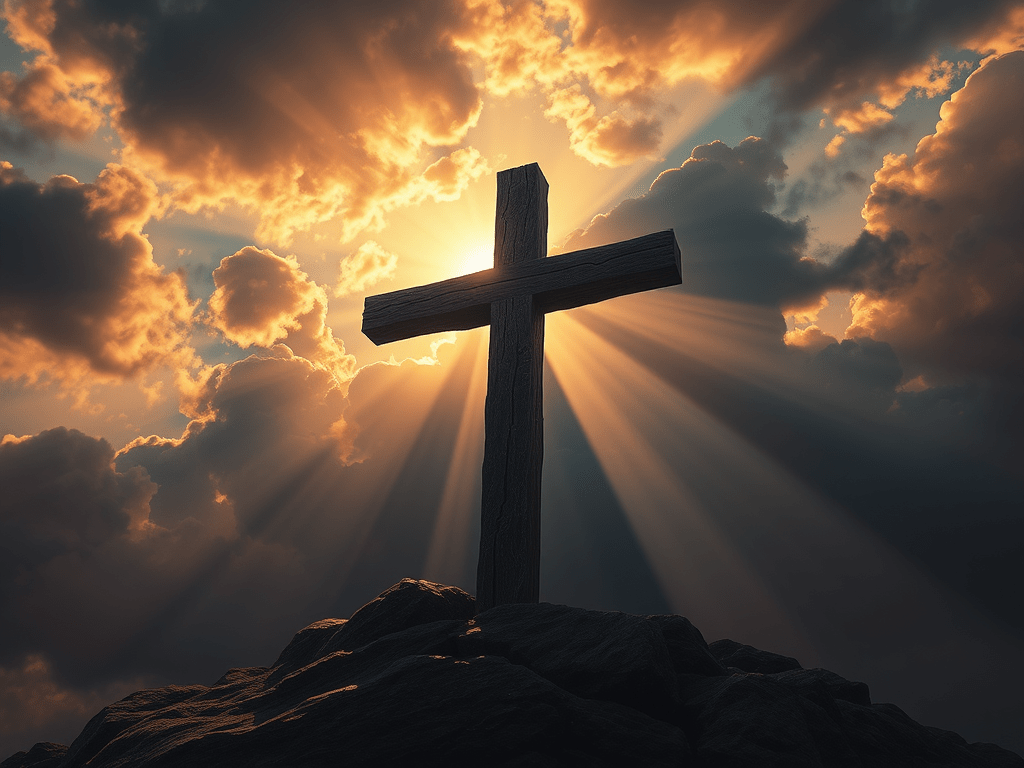
“But he was wounded for our transgressions, he was bruised for our iniquities: the chastisement of our peace was upon him; and with his stripes we are healed.” — Isaiah 53:5
Ever wonder why Christianity places such extraordinary emphasis on a day of execution? In our culture that avoids pain and suffering at all costs, Good Friday seems counterintuitive. And yet this paradox—that the darkest day in history became the source of our brightest hope—stands at the very center of our faith. Today, we pause to look unflinchingly at the cross, not just as a historical event, but as the definitive revelation of who God is and what He’s done for us. The ancient texts we’re about to explore predicted, depicted, and explained this cosmos-altering moment long before it happened, creating a tapestry of meaning that transforms how we understand everything.
The Prophetic Vision: Isaiah 52:13-53:12
If you were to design a religion from scratch, would you center it on a suffering servant? Seven hundred years before Christ, Isaiah painted a portrait so contrary to human expectation that it still stops us in our tracks. The servant who is “despised and rejected,” whose appearance is “marred beyond human semblance” doesn’t fit our instinctive image of divinity. And that’s precisely the point.
What makes Isaiah’s prophecy so extraordinary isn’t just its accuracy in predicting Christ’s suffering, but how it reframes that suffering as purposeful and redemptive. This isn’t tragedy; it’s strategy. The servant doesn’t accidentally stumble into suffering—he willingly enters it “like a lamb led to slaughter.” His wounds aren’t just his own; they’re substitutionary. He carries our griefs. He bears our sorrows. He is pierced for our transgressions. This paradoxical exchange stands at the heart of the gospel: through his punishment, we receive peace; through his wounds, we find healing.
The Cry of Abandonment: Psalm 22
“My God, my God, why have you forsaken me?” These haunting words, later echoed by Jesus on the cross, reveal something visceral about his sacrifice. In Psalm 22, we encounter raw, unfiltered suffering—a desperate cry that feels almost too human coming from the lips of the holy one.
What begins as desolation, however, doesn’t end there. The psalm takes a remarkable turn midway through, shifting from abandonment to anticipation, from suffering to sovereignty. This movement mirrors the Easter journey itself: Good Friday’s darkness giving way to Resurrection Sunday’s light. The psalmist’s experience foreshadows Christ’s, showing that the path through suffering ultimately leads to glory—not just for him, but for generations yet unborn who will proclaim his righteousness.
The details are stunning in their specificity: the mocking spectators, the physical agony, the gambling for clothing. Each element later fulfilled at Calvary reminds us that Christ’s death wasn’t an impromptu tragedy but the fulfillment of a divine plan centuries in the making.
The New Covenant Reality: Hebrews 10:16-25
What exactly did Christ’s death accomplish? Hebrews moves us from the what to the why of the cross. The writer reveals that all those ancient animal sacrifices weren’t the solution—they were merely pointing to it. They couldn’t purify conscience or remove guilt; they could only highlight humanity’s persistent sin problem.
But where the old system failed, Christ succeeded. His sacrifice wasn’t just another religious ritual; it was the ultimate game-changer that established a “new and living way.” The temple curtain that once separated people from God’s presence was torn in two—symbolized by Christ’s torn flesh—creating unprecedented access to relationship with God.
The theological significance is matched by practical implications. Because of what Christ accomplished, we can “draw near with a true heart,” “hold fast to our confession without wavering,” and “consider how to stir up one another to love and good works.” The cross isn’t just doctrine; it’s the foundation for an entirely new way of life characterized by confidence before God and consideration toward others.
The Historical Reality: John 18:1-19:42
John’s meticulous account brings us to the ground level of history—to the garden where Jesus prayed, the courtyard where Peter denied, the judgment seat where Pilate wavered, and the hill where creation’s architect was nailed to wooden beams.
What stands out in John’s telling is Jesus’ remarkable sovereignty even in suffering. He isn’t depicted as a helpless victim but as one who willingly lays down his life. When soldiers come to arrest him, they fall back at his words. Before Pilate, it sometimes seems unclear who is really on trial. Even his final words—”It is finished”—carry the tone not of defeat but of accomplishment.
John’s eyewitness details underscore the reality of what transpired. The water and blood flowing from Jesus’ side. The gambling for his garments. The care taken not to break his legs. These aren’t mythological flourishes but the kind of specific details that anchor the crucifixion firmly in history. The Word truly became flesh—real, vulnerable human flesh that could be betrayed, tortured, and killed.
The Convergence
These four passages reveal the multi-dimensional significance of the cross. Isaiah shows us the purposeful, substitutionary nature of Christ’s suffering. Psalm 22 captures the emotional and physical reality of that suffering while hinting at glory to follow. Hebrews explains the theological impact—how Christ’s sacrifice accomplishes what the old system never could. And John grounds it all in concrete historical reality.
Together, they reveal why the cross stands at the center of Christianity. It’s where justice and mercy meet. Where God’s holy standards and loving heart converge. Where the deepest problem of human existence—our separation from our Creator—finds its solution. The cross isn’t just central to our theology; it’s central to reality itself. All of history bends around this moment when the immortal suffered death, the sinless was condemned, and love went to its furthest extreme.
Points to Ponder
- The Paradox of Strength: How does Christ’s willing weakness on the cross challenge our culture’s definitions of power and success?
- The Personal Exchange: Isaiah says “he was wounded for our transgressions.” Have you fully embraced the personal nature of this substitution? What might change if you did?
- The New Access: Hebrews speaks of a “new and living way” into God’s presence. How might your prayer life change if you truly believed nothing now separates you from God’s presence?
- The Community Response: How does Good Friday shape not just your individual faith but your relationships with other believers? How might it transform how you “stir up one another to love and good works”?
- The Convergence of History: How does understanding the historical reality of the crucifixion impact how you relate to Jesus? Does it make him more or less approachable to you personally?
Closing Prayer
Lord Jesus, today we stand in awe before your cross. We’re stunned by the depth of your love that would endure such suffering for us. We’re humbled by the cost of our redemption. We’re grateful beyond words for the access we now have to the Father through you.
Forgive us for the times we’ve treated casually what cost you everything. Forgive us for keeping the cross at a comfortable distance—as a symbol or a doctrine—rather than allowing its reality to transform us completely.
As we remember your sacrifice today, write its meaning deeply on our hearts. Let the marvel of your substitutionary love change how we see ourselves and others. Let the wonder of our forgiveness make us quick to forgive. Let the power that held you to the cross now empower us to take up our crosses daily and follow you.
Thank you that the story doesn’t end here—that Sunday is coming. But today, we linger at Calvary, overwhelmed by the truth that while we were still sinners, you died for us. In your precious name we pray. Amen.
“Let us hold fast the profession of our faith without wavering; (for he is faithful that promised;) And let us consider one another to provoke unto love and to good works.” — Hebrews 10:23-24
 Josh Cehulik