
“This is the day which the LORD hath made; we will rejoice and be glad in it.” – Psalm 118:24
We’ve all experienced that moment of anticipation—waiting for the big day to arrive. Maybe it was your wedding day, the birth of a child, a job interview, or closing on your first home. There’s that electric feeling when you wake up and think, “Today is the day.”
But what happens when the day arrives and it doesn’t look like what you expected? What happens when your long-awaited moment unfolds in ways you never imagined?
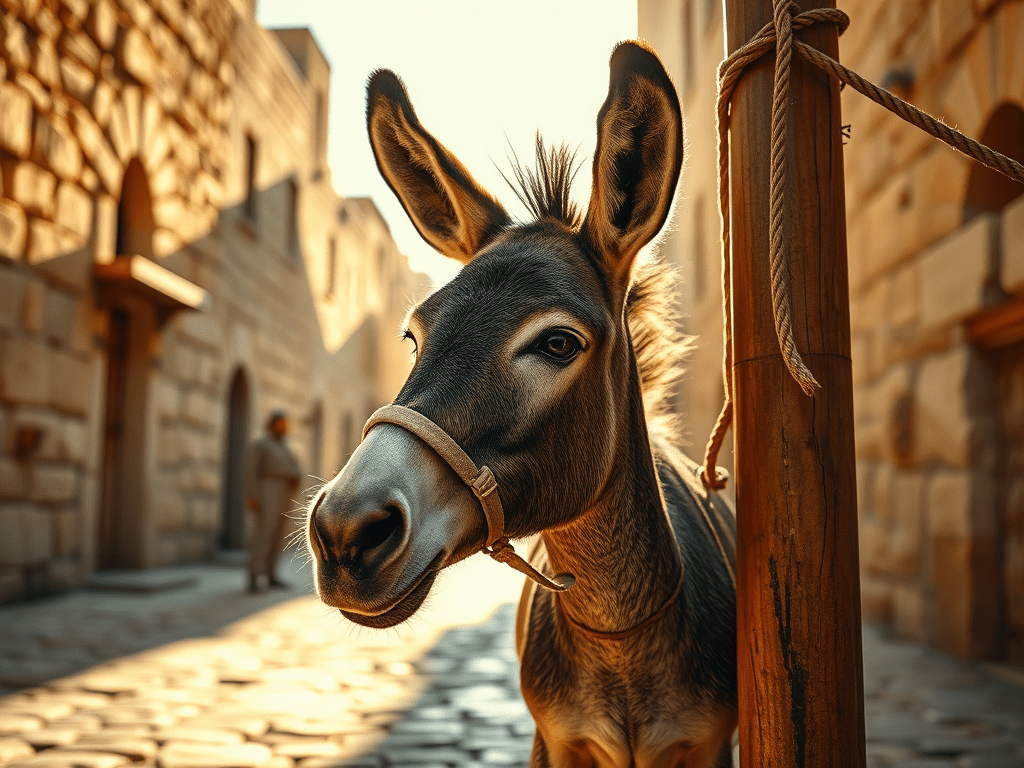
This is precisely the tension we find in these two passages. The ancient words of Psalm 118 proclaiming “This is the day” find their fulfillment in Luke’s account of Jesus entering Jerusalem. It’s a day centuries in the making—yet it arrives in the most unexpected packaging: on a borrowed donkey.
The Anticipation in Psalm 118
Psalm 118 is actually a processional liturgy, likely used when pilgrims would ascend to Jerusalem for major festivals. When they sang “Open to me the gates of righteousness,” they weren’t being poetic—they were literally approaching the gates of Jerusalem, ready to worship at the temple.
Many casual readers miss the fact that this psalm was recited at Passover as part of the Hallel (Psalms 113-118). Jewish families would sing these words yearly as they remembered God’s deliverance. The phrase “Blessed is he who comes in the name of the LORD” was a standard greeting for pilgrims arriving in Jerusalem.
The line “The stone which the builders refused is become the head stone of the corner” points to something deeply significant for us today: God’s pattern of using the rejected, the overlooked, and the dismissed to accomplish His greatest work. Where have you felt rejected in your life, only to discover later that God was positioning you for a greater purpose?
The Arrival on a Borrowed Donkey
When Jesus orchestrates his entrance into Jerusalem, he’s not just being theatrical—he’s deliberately fulfilling Zechariah’s prophecy about the Messiah coming on a donkey. But most people miss that using an unridden colt would have been incredibly difficult. Unbroken animals are notoriously unpredictable. Yet this colt carried Jesus peacefully, pointing to his authority over creation itself.
Notice the detail Luke includes—it was a borrowed donkey. The King of Kings arrives on borrowed transportation. The Creator of everything owns nothing. This is how God’s big moments often appear in our lives: humble, ordinary, borrowed.
The Pharisees’ objection reveals another layer. When they tell Jesus to silence his disciples, his response—”if these should hold their peace, the stones would immediately cry out”—isn’t just a clever comeback. It’s an extraordinary statement about how the creation itself recognizes what the religious leaders cannot see: the King has arrived.
How often do we, like the Pharisees, miss God’s work because it doesn’t conform to our expectations? The day the Lord has made might not look like we imagined. The big moment might arrive on a borrowed donkey.
The Future Day
But here’s what makes these passages even more powerful: they don’t just point backward to Palm Sunday but to another “day” yet to come. That phrase “Blessed is he who comes in the name of the Lord” will find its ultimate fulfillment when Jesus returns, not on a donkey but as described in Revelation—on a white horse, with the armies of heaven following him.
The stones that were ready to cry out at his first coming will be part of the cosmic renewal at his second coming. As Paul writes in Romans 8, Creation itself is “groaning as in the pains of childbirth,” waiting for its full redemption when Christ returns.
When Jesus told the Pharisees the stones would cry out, he gave us a glimpse of what Isaiah prophesied: “The mountains and hills will burst into song before you, and all the trees of the field will clap their hands.” Creation knows something we often forget—the King who entered Jerusalem that day will return to make all things new.
That future day—the ultimate “day which the LORD hath made”—will make Palm Sunday look like a quiet prelude. And just like his first coming, his return might not match our expectations. Are we watching? Are we ready for big moments that might arrive in unexpected ways?
Conclusion
“This is the day” isn’t just about recognizing historical moments or anticipating future ones. It’s about developing eyes to see God’s hand in our present. The same Jesus who orchestrated his entrance into Jerusalem on a borrowed donkey is now orchestrating circumstances in your life. The question isn’t whether God is working, but whether we’ll have eyes to see it.
Like the crowds in Jerusalem who quickly turned from “Hosanna!” to “Crucify him!”, we can miss the significance of God’s work when it doesn’t match our agenda. The day the Lord has made might not be the day we would have made. But it’s precisely in that tension that we encounter the living God.
The borrowed donkeys in your life—those humble, unexpected means God uses—might carry the most significant moments you’ll ever experience.
Points to Ponder
- What “borrowed donkeys” might God use in your life now that you’re overlooking?
- How does Jesus’ fulfillment of Psalm 118 change how you view prophecies about his return?
- Where have you been the “rejected stone” that God is shaping into something essential?
- Even under challenging circumstances, how can you practice saying “This is the day the LORD has made”?
- If creation recognizes Jesus, what might be blocking your recognition of his work in your life?
Prayer
Lord, forgive us for the ways we impose our expectations on Your work. Open our eyes to see You in the ordinary and the unexpected. Help us recognize “the day You have made” even when it arrives on borrowed transportation. Give us the humility to celebrate Your presence on a donkey or a white horse. As we wait for that ultimate day of Your return, teach us to live in the present day with hope and expectancy. May we join creation in praising You when we lack the wisdom to see what You’re doing. This is the day You have made—teach us to rejoice and be glad in it. Amen.
“The stone which the builders refused is become the head stone of the corner. This is the LORD’S doing; it is marvellous in our eyes.” – Psalm 118:22-23
 Josh Cehulik