
Have you ever caught yourself evaluating a church service the way you might review a movie? “The music was great today.” “The sermon didn’t really connect with me.” “I wish they’d chosen different songs.” I know I have. It’s almost second nature in our consumer-oriented culture.
But what if we’ve fundamentally misunderstood what’s happening when we gather for worship? What if we’ve gotten the roles all wrong?
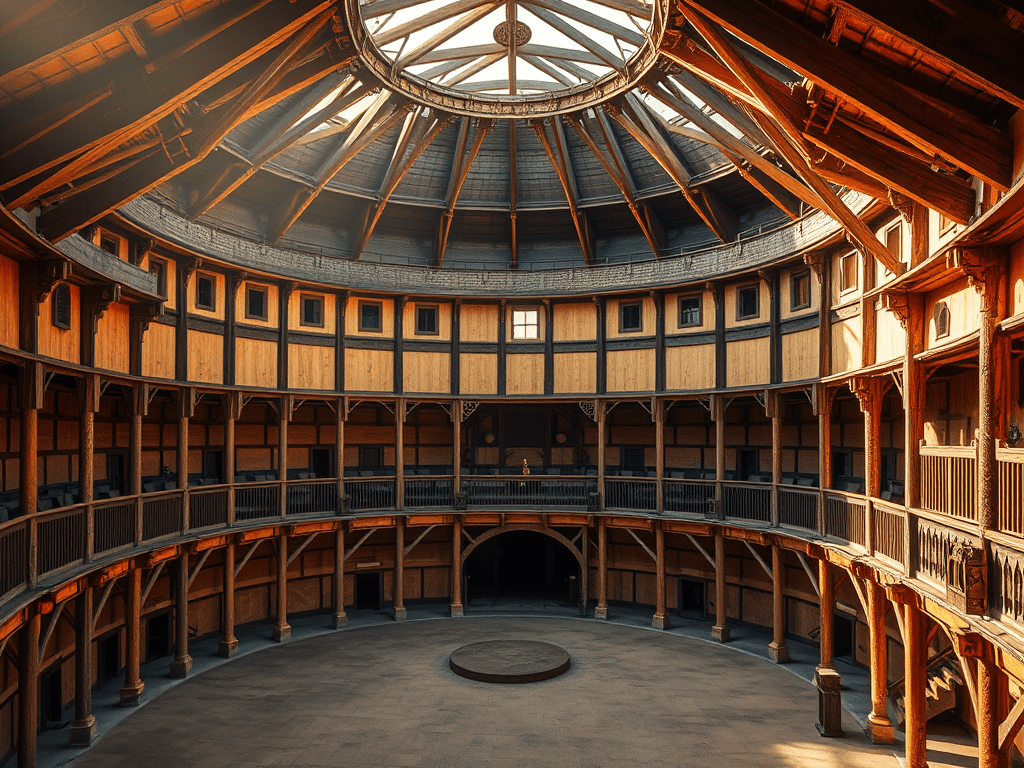
The Danish philosopher Søren Kierkegaard offers us a powerful metaphor that might just transform how we think about Sunday mornings. He compares worship to a theatrical production, but with a crucial twist that turns our common understanding upside down.
In a theater, the actors perform on stage while the audience watches and evaluates. The prompter—that person hidden from view who whispers lines to actors who forget—is barely noticed. But in Kierkegaard’s vision of worship, everything changes:
“The speaker is not the actor—not in the remotest sense. No, the speaker is the prompter… The stage is eternity, and the listener stands before God during the talk.”
What does he mean? Simply this: In true worship, God is both audience and co-participant. The pastor or worship leader is merely the prompter, helping us remember our lines. And we—all of us in the congregation—are not merely performing before God but participating with God in a divine dialogue.
The Biblical Roots of Collaborative Worship
This isn’t just a clever philosophical idea. It’s deeply rooted in Scripture.
Think about the Psalms—they’re filled with active commands: “Make a joyful noise,” “Lift up your hands,” “Bow down and worship.” These aren’t invitations to sit back and observe but calls to participate actively in worship that God himself initiates and joins.
In 1 Corinthians 3:9, Paul reminds us that “we are God’s fellow workers” or “co-laborers.” This collaborative relationship extends to our worship—we don’t perform for a distant deity but participate in a transformative work that God himself is doing among us and through us.
Consider what Peter says about us being “a royal priesthood” (1 Peter 2:9). In the Old Testament, priests weren’t performing solo acts—they were mediating a relationship, facilitating an encounter between God and people. Peter is telling us that through Christ, we all have this priestly role now, not just representing ourselves before God but also representing God to each other.
Remember Paul’s image of the church as a body? A body has no passive parts. Every member functions according to its design, and Christ himself is the head of this body—directing, empowering, and participating in its every movement. When Paul describes a worship gathering in 1 Corinthians 14:26, he assumes everyone has something to contribute: “When you come together, each one has a hymn, a lesson, a revelation…”
Worship as Remembrance and Rehearsal
One of the most important aspects of worship is its function as remembrance. Throughout Scripture, God commands His people to remember—to recall His mighty deeds, His faithfulness, His covenant promises. In our forgetfulness, we need regular reminders of who God is and what He has done.
Jesus himself instituted this pattern when He broke bread with His disciples, saying, “Do this in remembrance of me” (Luke 22:19). He knew our tendency to forget, to lose sight of the gospel amidst life’s distractions and difficulties.
Our weekly gatherings serve as a sacred rehearsal of the gospel drama. Like actors rehearsing their lines and movements, we gather to retell and reenact the story of redemption—God’s creation, our fall, Christ’s redemption, and the coming restoration of all things. This isn’t merely an intellectual exercise but a participatory remembrance.
When we affirm our faith together, we remember what God has done. When we hear Scripture read and taught, we rehearse God’s story. When we gather around the Lord’s Table, we reenact the central scene of this divine drama. When we lift our voices in song, declaring God’s faithfulness and love, we write these truths on our hearts once more.
This rhythm of remembrance shapes us. It reorients our perspective from the temporary concerns of our week to the eternal realities of God’s kingdom. It reminds us that we’re part of a story much larger than ourselves—a story that began long before us and will continue long after us, yet a story in which we have been given meaningful roles.
And remarkably, this remembrance isn’t just about looking back. It also prepares us for what’s ahead—the final act of God’s redemptive drama. As Paul writes, “For as often as you eat this bread and drink the cup, you proclaim the Lord’s death until he comes” (1 Corinthians 11:26). Our worship points us forward to the inevitable conclusion of God’s story when Christ returns, and His kingdom comes in fullness.
The Trinity as Partners in Our Worship
When we gather on Sundays, we’re entering into something the Trinity has been doing for all eternity—and remarkably, we are invited to join in.
The Father has always been the initiator of worship, but not merely as a passive recipient. Jesus told the Samaritan woman that “the Father is seeking such people to worship him” (John 4:23)—God actively pursues relationship with us. Our worship doesn’t begin with us—it begins with God’s invitation.
Jesus himself serves not just as an example but as our active worship partner. Hebrews 2:12 shows him standing among us, declaring: “I will tell of your name to my brothers; in the midst of the congregation, I will sing your praise.” When we worship, we’re not performing for Jesus; we’re joining a chorus that Jesus himself is leading and singing alongside us.
And the Holy Spirit? He’s not merely observing our worship but actively empowering it. As Paul says, “We do not know what to pray for as we ought, but the Spirit himself intercedes for us” (Romans 8:26). The Spirit doesn’t just prompt us with lines to recite; he joins his voice with ours, strengthening our weak prayers and transforming our faltering praise into something beautiful.
From Spectators to Participants: A Practical Shift
So, how do we make this practical? How do we move from being passive consumers to active co-laborers with God?
First, we need to prepare. Just as friends prepare to meet one another, we prepare to encounter God. Worship begins before Sunday morning. It involves prayer, confession, scripture reading, and heart preparation—not to perform flawlessly but to engage genuinely.
This might be as simple as spending a few quiet minutes with your coffee on Sunday morning, reading the psalm for the day, or silently praying, “Lord, help me to hear what you have to say today.” It might mean looking at the Scripture readings in advance or listening to worship music during your Saturday chores. The point isn’t elaborate spiritual exercises but intentional readiness to participate in what God is doing.
Second, we need to engage fully. Have you noticed how some people sing heartily while others barely move their lips? How some lean forward during the sermon while others seem mentally checked out? In this divine dialogue, our full presence matters—our singing, our prayers, our attentiveness, our amens are all part of a conversation with God.
Third, we need to listen for the Spirit’s guidance. The Spirit doesn’t just prompt us with lines to say; He invites us into deeper participation. He might lead you to pray for someone sitting nearby, to confess a sin that comes to mind, to commit to an act of service, or simply to rest in God’s presence. Being attentive to this guidance means recognizing God as active in our midst, not just watching from afar.
Finally, we need to remember we’re in God’s presence. In Kierkegaard’s words, “God himself is the critical theatergoer, who looks on to see how the lines are spoken and how they are listened to.” But God is not merely observing us—He is also working in us and through us. As Paul writes, “it is God who works in you, both to will and to work for his good pleasure” (Philippians 2:13).
Worship as Divine Drama
Think of worship less as a performance and more as an interactive drama with God as both audience and fellow artist. It’s a sacred play where the lines between observer and participant blur—God reveals, we respond; God initiates, we join in; God empowers, we move.
When the Scripture is read, God is speaking through His Word. When we sing in response, we’re not just performing for God but joining a divine chorus He’s already leading. When we hear the sermon, God is addressing us through His Word while simultaneously enacting His truth in our hearts. When we respond in prayer or commitment, we’re participating in a scene God is directing and inhabiting with us.
This dramatic, participatory nature of worship explains why passive attendance isn’t enough. Imagine watching a play where half the actors remain silent, never moving from their spots on stage. The drama would fall apart. Similarly, worship requires our active engagement as co-participants with God himself.
Why This Matters
Why does this perspective matter? Because it changes everything about how we approach Sunday mornings.
It means we come not merely to perform for God or observe Him from afar but to participate in the divine drama He is already unfolding. As Paul says, “We are God’s fellow workers” (1 Corinthians 3:9)—co-participants in this sacred story.
It means the success of a worship service isn’t measured by how good the music made us feel or how engaging the sermon was but by whether we entered into authentic communion with God and each other within this unfolding story.
It means we’re not just consumers shopping for religious goods and services but priests participating in an eternal reality, offering spiritual sacrifices acceptable to God through Jesus Christ (1 Peter 2:5), even as Christ offers himself alongside us.
Most importantly, it reminds us that worship is a divine-human collaboration. God is both audience and fellow participant—directing the drama, playing the lead role, and inviting us into scenes of redemption, reconciliation, and renewal. He is both its object and its enabling power, the One from whom all blessings flow and in whom we live and move and have our being.
So next Sunday, as you enter your place of worship, remember: you’re not walking into a theater to be entertained. You’re not even walking onto a stage merely to perform. You’re joining a sacred rehearsal of the greatest story ever told—a drama that began at creation, found its climactic scene at the cross, and continues to unfold until Christ returns.
In this weekly rehearsal, we remember God’s mighty acts in history, we participate in His ongoing work in the present, and we anticipate the day when the curtain will rise on the final act—when Christ returns, God makes all things new, and His glory fills the earth as the waters cover the sea.
The script has been written. The Director has called “places.” God awaits not just as audience but as fellow participant. Let’s take our place in this divine rehearsal, remembering what God has done and preparing for what He will yet do.
 Josh Cehulik